The problem
A growing mod collection was spread across individual repositories and distribution platforms. Users needed one place to understand what exists, what changed, and where to get each project.
Case study · Open-source catalog
One release and discovery surface for a growing family of game mods.
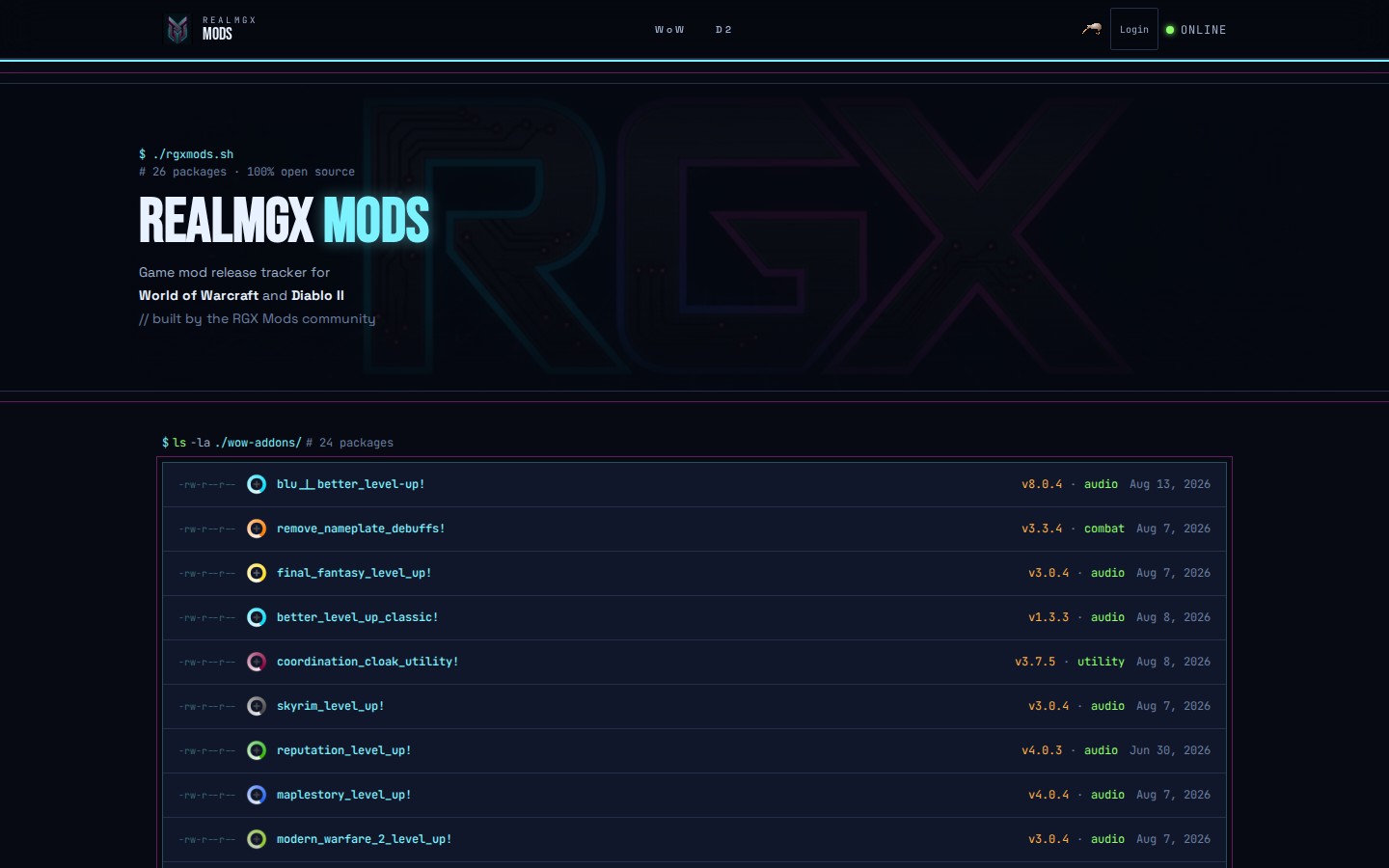
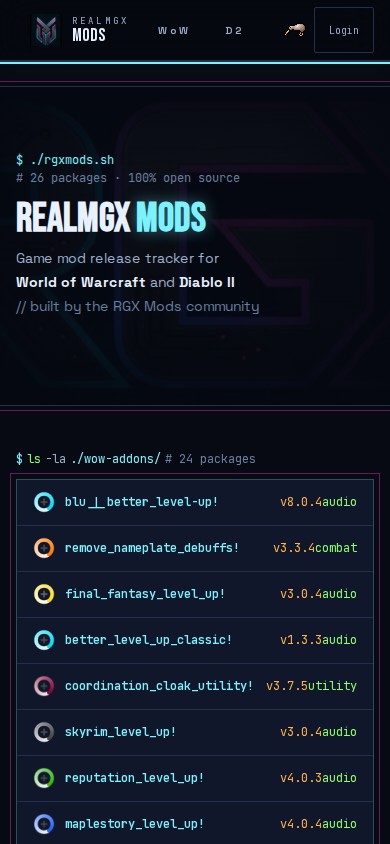
A growing mod collection was spread across individual repositories and distribution platforms. Users needed one place to understand what exists, what changed, and where to get each project.
cranberriestudios built a unified catalog that models each package, synchronizes repository context, and provides dedicated ecosystem and mod pages with search and filtering.
The RGX collection can be explored as a coherent product family while individual repositories remain the source for releases, code, and project-specific documentation.
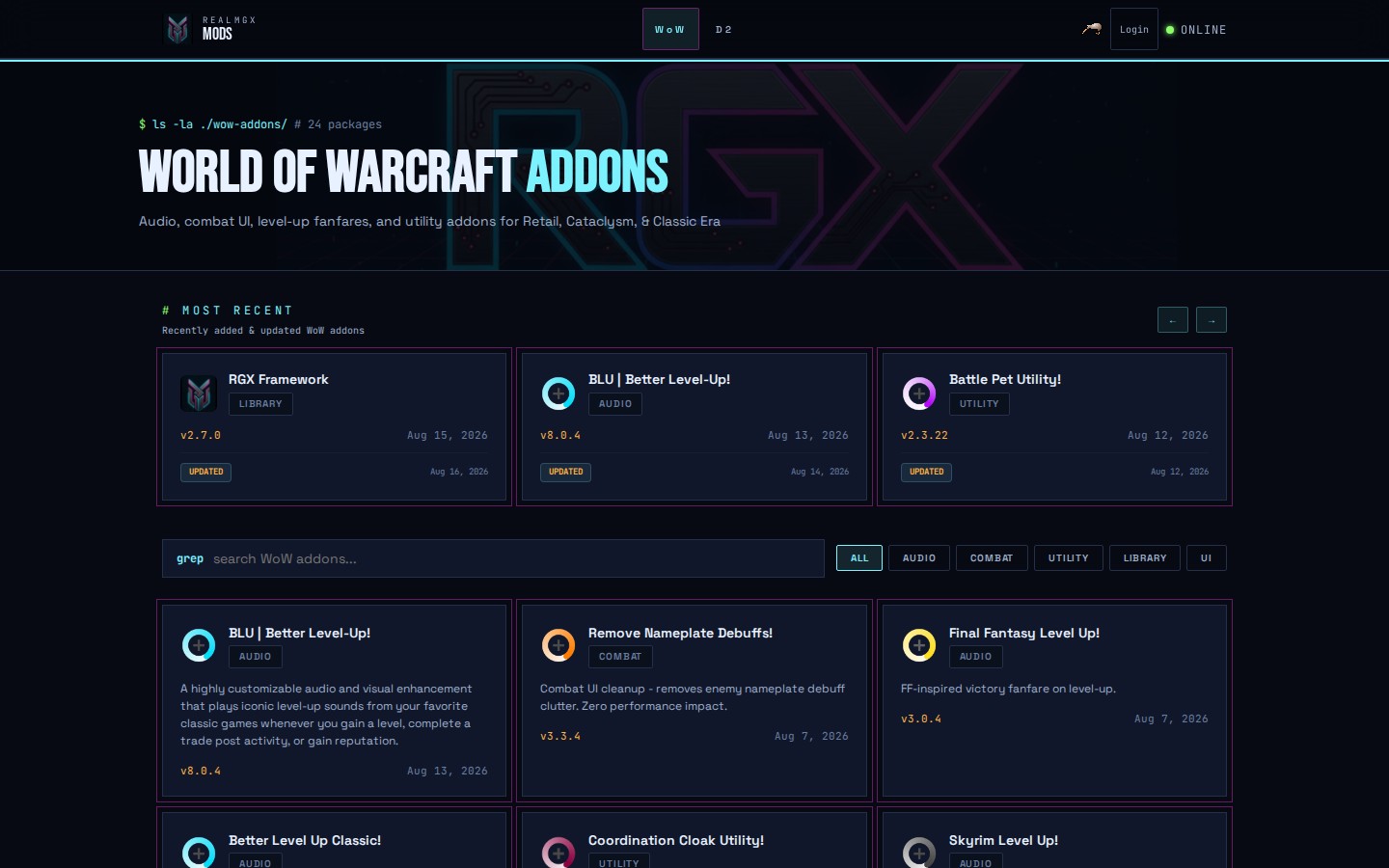
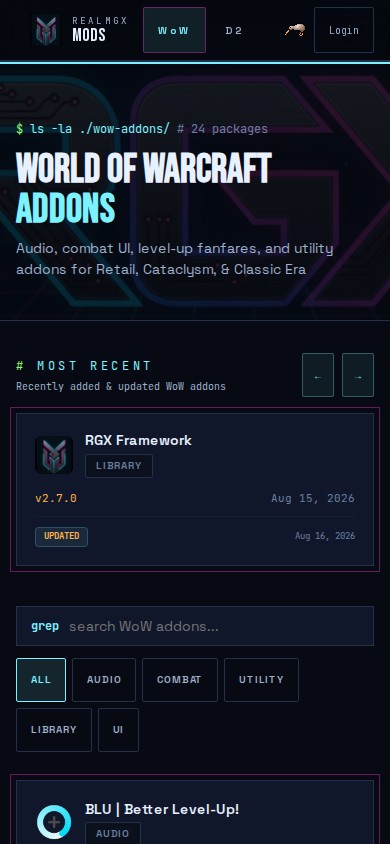
Counts taken from the current catalog and route implementation.
26
Catalog packages
The current public catalog data contains 26 mod packages with dedicated metadata and routes.
24
WoW addons
World of Warcraft is the largest catalog lane, with its own browse and discovery experience.
2
Diablo II mods
Diablo II projects are separated into their own catalog lane instead of being mixed into WoW results.
26
Dedicated mod pages
The application includes a specialized page implementation for every current catalog package.
01
Release versions, activity metadata, documentation, and source links are synchronized from external repositories into a public catalog.
02
World of Warcraft and Diablo II have distinct catalog surfaces, visual treatment, and browse paths.
03
Visitors can search the catalog and narrow WoW addons by category without leaving the page.
04
Each package has a stable /mod/... route that can surface overview, release, source, and documentation context.
05
Repository documentation is brought into the mod experience instead of forcing users to reconstruct project context across sites.
06
Bundled catalog data lets the public surface render even when the live API layer is unavailable.
The public experience combines a static catalog baseline with repository/API synchronization. That keeps browsing resilient while letting release and project metadata stay tied to source repositories.
We can turn distributed repositories and release data into a branded discovery experience without replacing the systems that already own the source.